The history of Abbey Station
Preserving and promoting Shrewsbury’s rich railway heritage
From the Benedictine abbey to the Potts line, Colonel Stephens’ light railway, wartime explosives traffic and the oil trains of the Abbey Yard, discover the people and events behind Shrewsbury Abbey Station.
The display panels
Four information panels at Abbey Station tell the story of the site, in historical order. Select a panel to see it full size, or open the panel text to read it here.
Panel 1
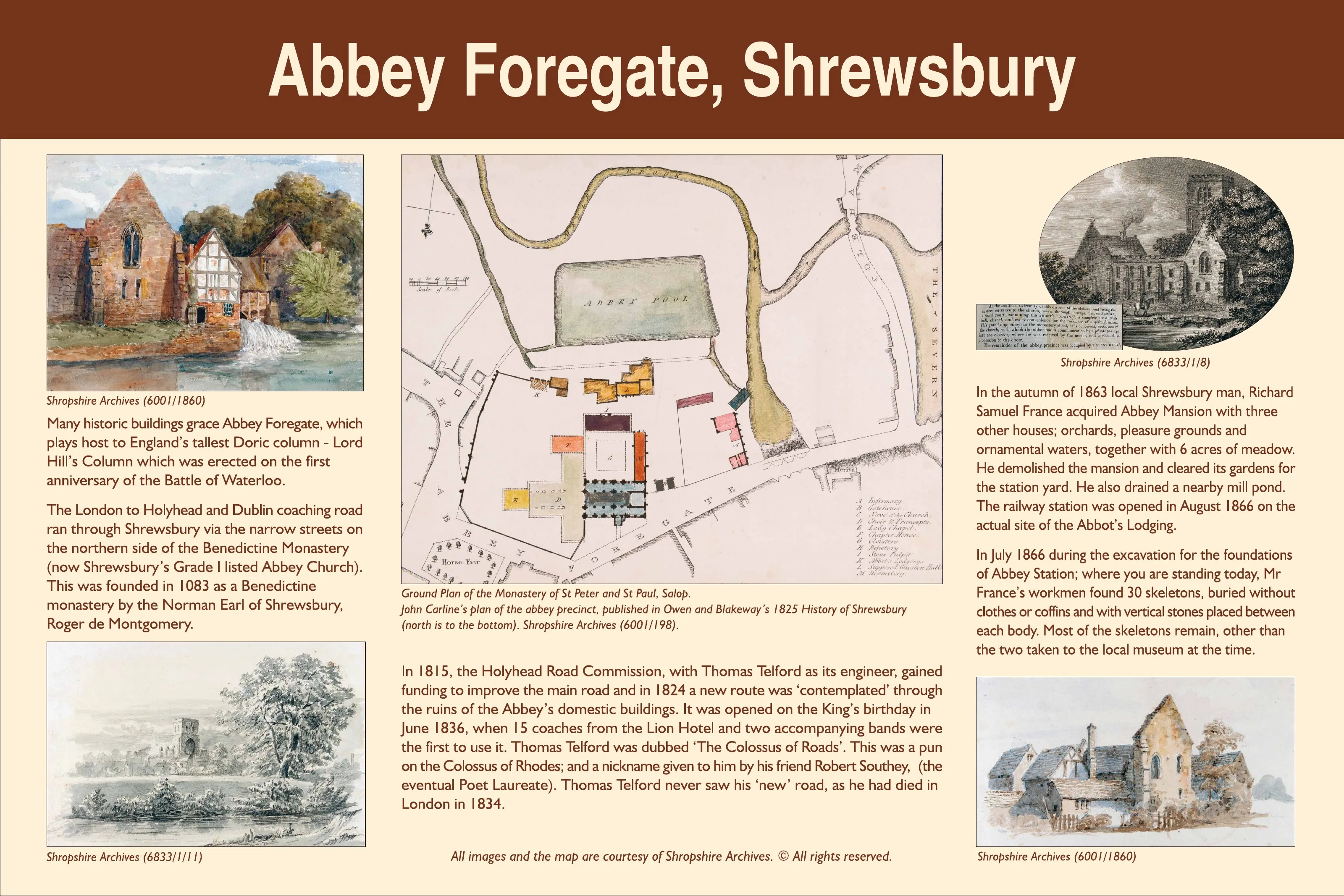
Abbey Foregate
This area has seen many developments, and the current car park alongside Shrewsbury Abbey has medieval remnants below its surface, and in the 19th century was the site of railway lines, passenger and goods traffic.
Read the panel text
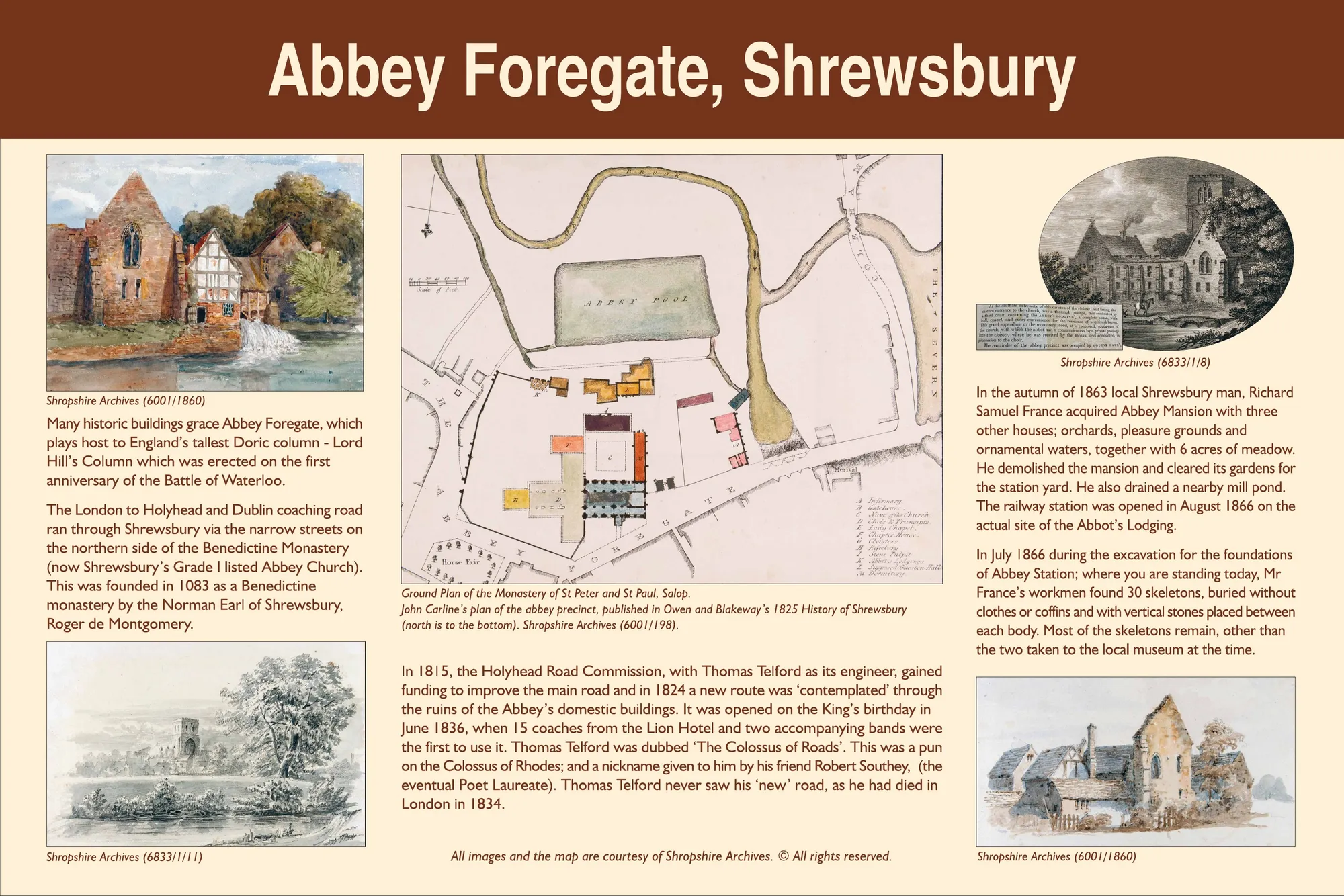
Abbey Foregate, Shrewsbury
Many historic buildings grace Abbey Foregate, which plays host to England’s tallest Doric column – Lord Hill’s Column, which was erected on the first anniversary of the Battle of Waterloo.
The London to Holyhead and Dublin coaching road ran through Shrewsbury via the narrow streets on the northern side of the Benedictine Monastery (now Shrewsbury’s Grade I listed Abbey Church). This was founded in 1083 as a Benedictine monastery by the Norman Earl of Shrewsbury, Roger de Montgomery.
In 1815, the Holyhead Road Commission, with Thomas Telford as its engineer, gained funding to improve the main road, and in 1824 a new route was ‘contemplated’ through the ruins of the Abbey’s domestic buildings. It was opened on the King’s birthday in June 1836, when 15 coaches from the Lion Hotel and two accompanying bands were the first to use it. Thomas Telford was dubbed ‘The Colossus of Roads’. This was a pun on the Colossus of Rhodes, and a nickname given to him by his friend Robert Southey (the eventual Poet Laureate). Thomas Telford never saw his ‘new’ road, as he had died in London in 1834.
In the autumn of 1863 local Shrewsbury man Richard Samuel France acquired Abbey Mansion with three other houses, orchards, pleasure grounds and ornamental waters, together with 6 acres of meadow. He demolished the mansion and cleared its gardens for the station yard. He also drained a nearby mill pond. The railway station was opened in August 1866 on the actual site of the Abbot’s Lodging.
In July 1866, during the excavation for the foundations of Abbey Station, where you are standing today, Mr France’s workmen found 30 skeletons, buried without clothes or coffins and with vertical stones placed between each body. Most of the skeletons remain, other than the two taken to the local museum at the time.
Pictures on the panel
- Ground Plan of the Monastery of St Peter and St Paul, Salop. John Carline’s plan of the abbey precinct, published in Owen and Blakeway’s 1825 History of Shrewsbury (north is to the bottom). Shropshire Archives (6001/198).
- Drawings of the abbey buildings: Shropshire Archives (6001/1860), (6833/1/8) and (6833/1/11).
- All images and the map are courtesy of Shropshire Archives. © All rights reserved.
Panel 2
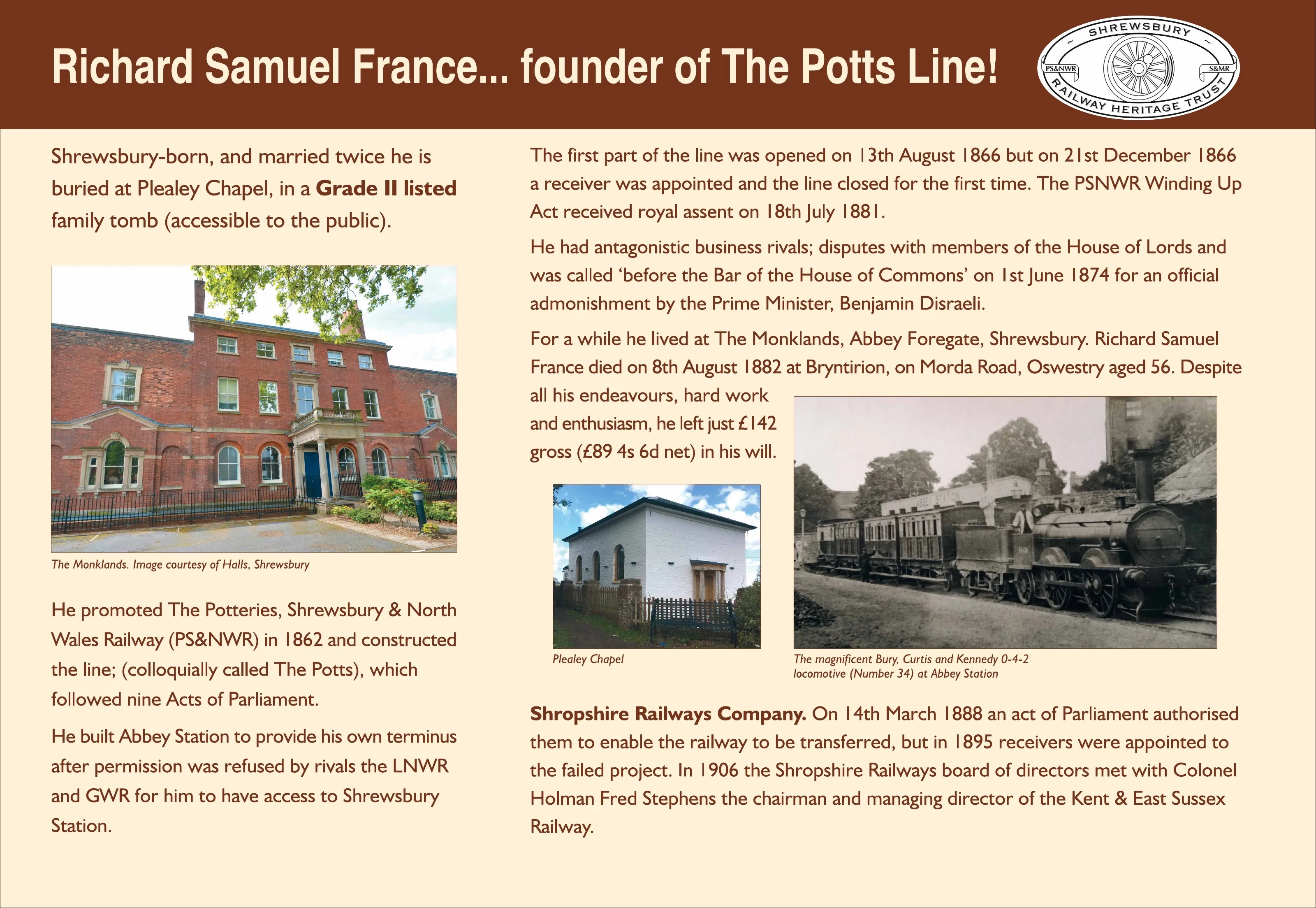
Richard Samuel France
The massive financial collapse of Overend, Gurney & Company, with a loss of £11 million on May 10th 1866, greatly affected railways across the UK, including the Potteries, Shrewsbury and North Wales Railway, and was another difficulty that Richard Samuel France had to endure.
Read the panel text
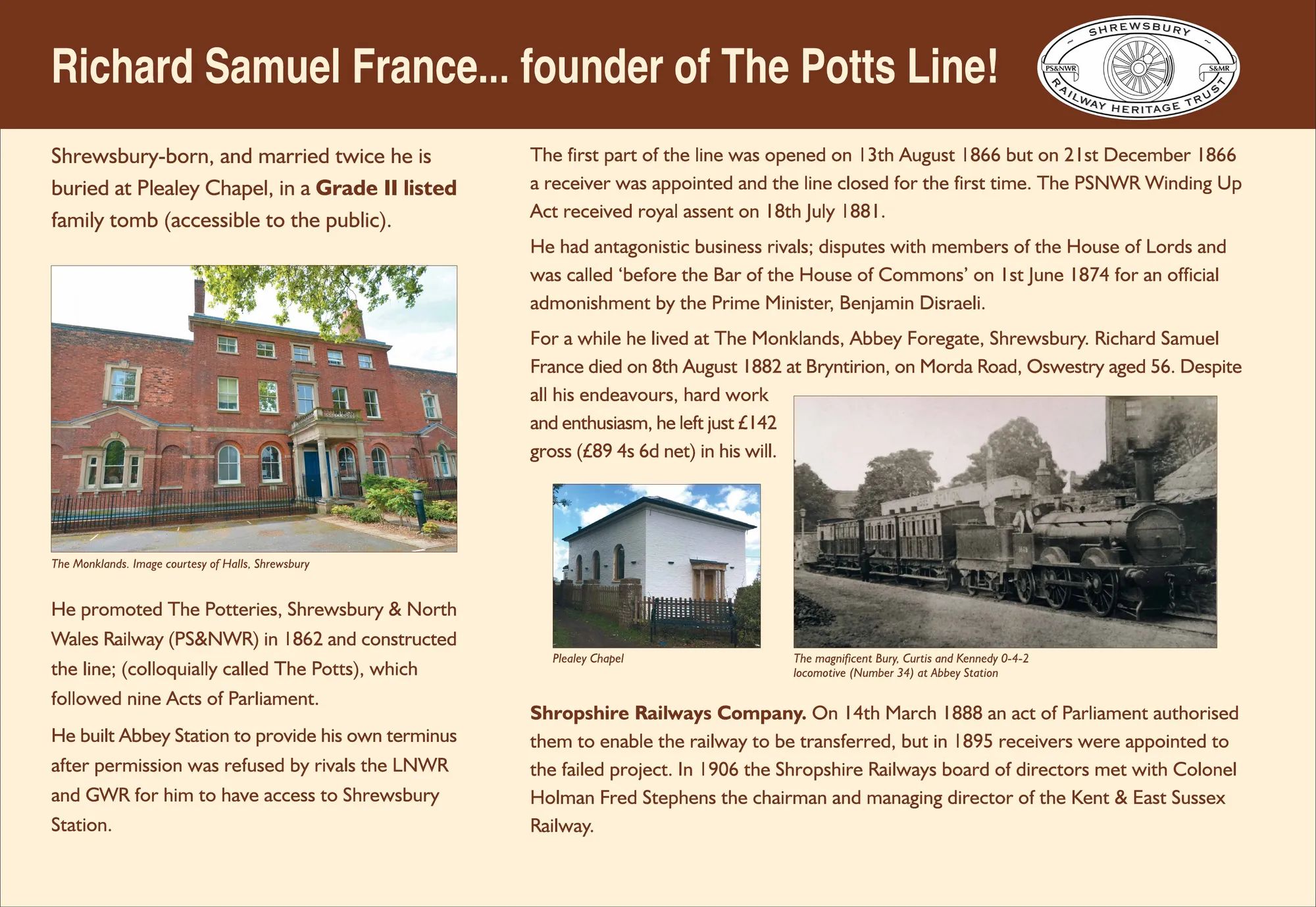
Richard Samuel France… founder of The Potts Line!
Shrewsbury-born and married twice, he is buried at Plealey Chapel, in a Grade II listed family tomb (accessible to the public).
He promoted The Potteries, Shrewsbury & North Wales Railway (PS&NWR) in 1862 and constructed the line (colloquially called The Potts), which followed nine Acts of Parliament.
He built Abbey Station to provide his own terminus after permission was refused by rivals the LNWR and GWR for him to have access to Shrewsbury Station.
The first part of the line was opened on 13th August 1866, but on 21st December 1866 a receiver was appointed and the line closed for the first time. The PS&NWR Winding Up Act received royal assent on 18th July 1881.
He had antagonistic business rivals and disputes with members of the House of Lords, and was called ‘before the Bar of the House of Commons’ on 1st June 1874 for an official admonishment by the Prime Minister, Benjamin Disraeli.
For a while he lived at The Monklands, Abbey Foregate, Shrewsbury. Richard Samuel France died on 8th August 1882 at Bryntirion, on Morda Road, Oswestry, aged 56. Despite all his endeavours, hard work and enthusiasm, he left just £142 gross (£89 4s 6d net) in his will.
Shropshire Railways Company
On 14th March 1888 an Act of Parliament authorised them to enable the railway to be transferred, but in 1895 receivers were appointed to the failed project. In 1906 the Shropshire Railways board of directors met with Colonel Holman Fred Stephens, the chairman and managing director of the Kent & East Sussex Railway.
Pictures on the panel
- The Monklands. Image courtesy of Halls, Shrewsbury.
- Plealey Chapel.
- The magnificent Bury, Curtis and Kennedy 0-4-2 locomotive (Number 34) at Abbey Station.
Panel 3
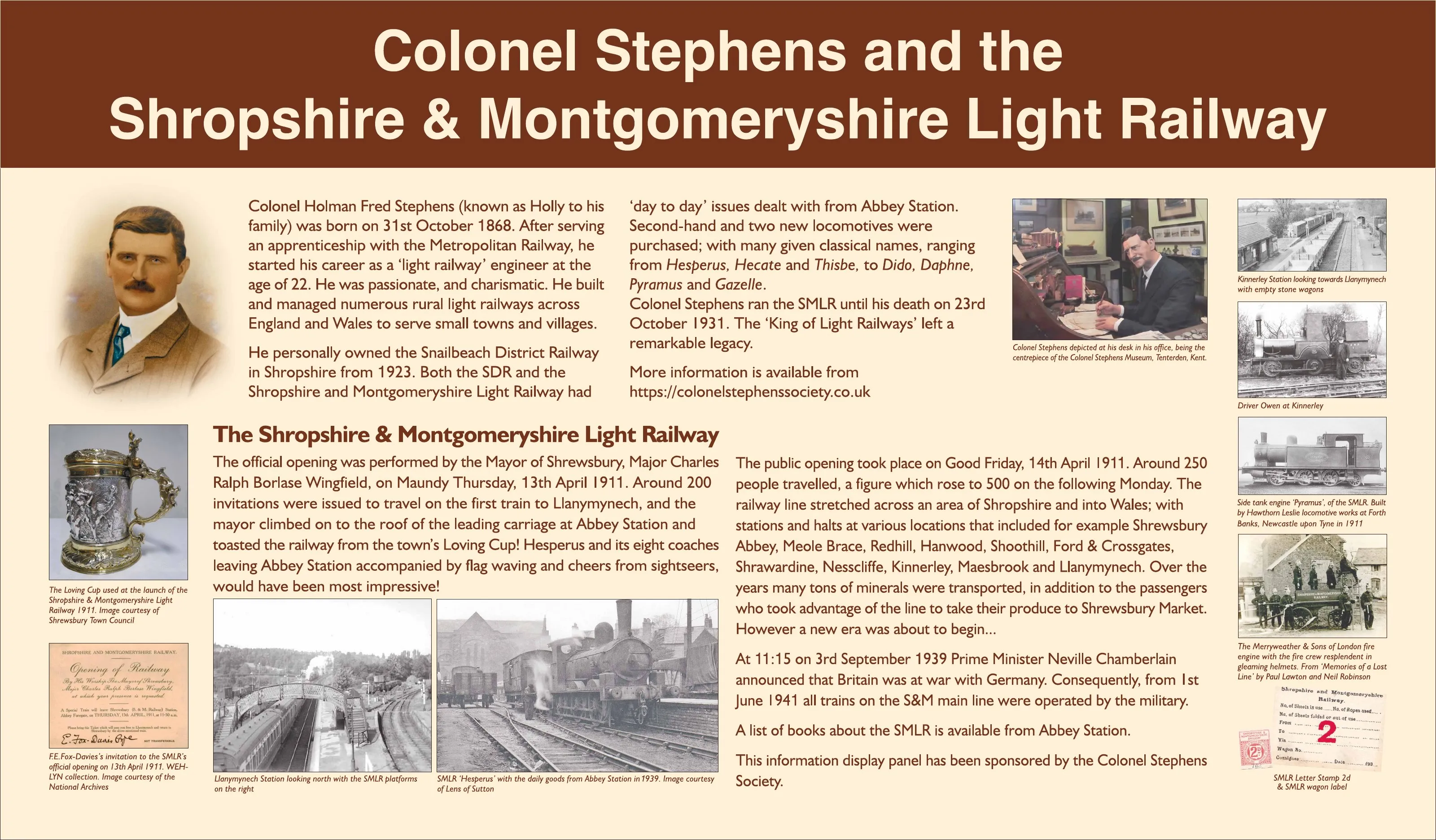
Colonel Stephens
The Colonel Stephens Society was formed in 1985 and focuses on the many railways that were engineered, and often managed, by the charismatic Colonel Holman Fred Stephens.
Read the panel text
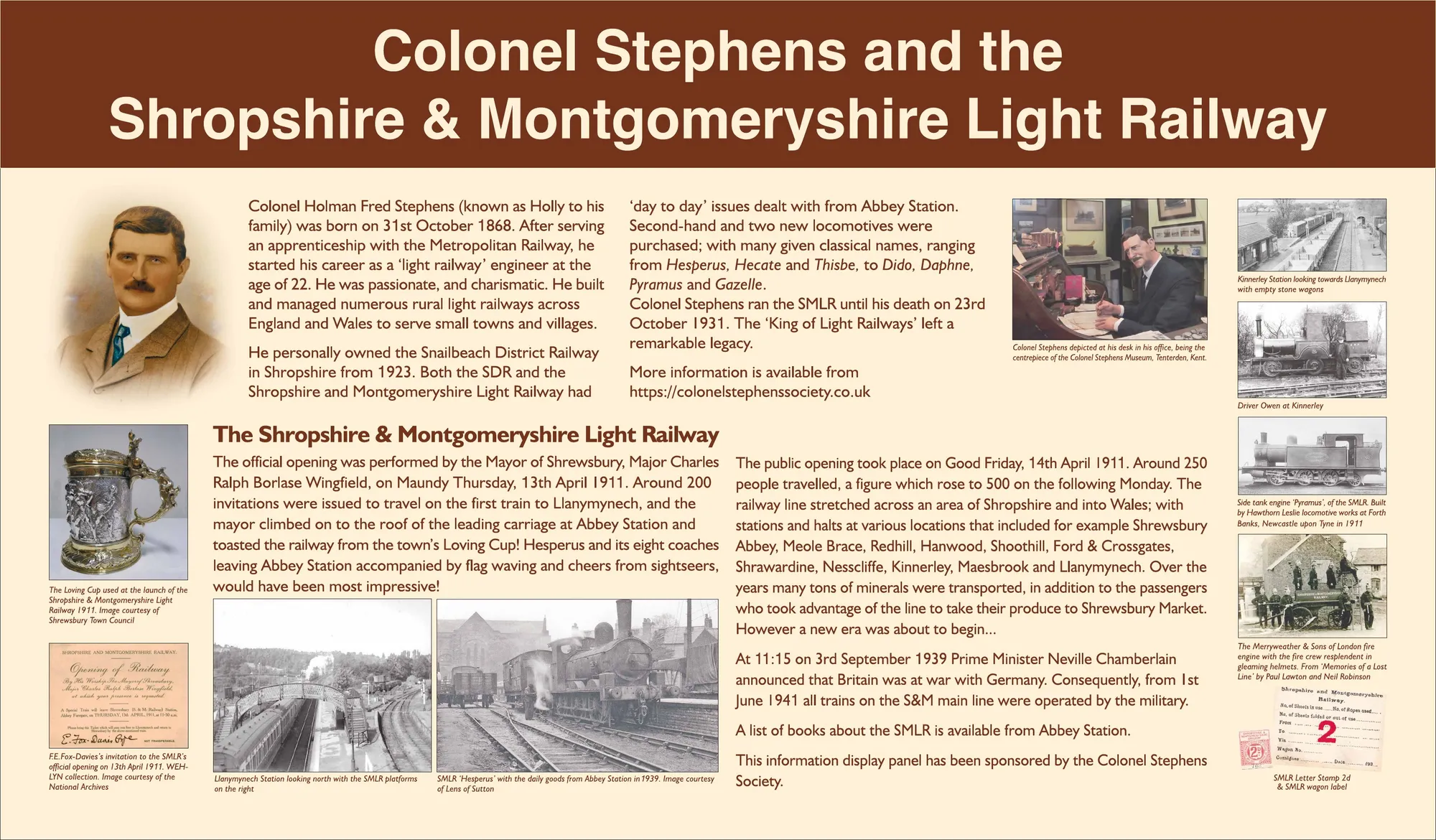
Colonel Stephens and the Shropshire & Montgomeryshire Light Railway
Colonel Holman Fred Stephens (known as Holly to his family) was born on 31st October 1868. After serving an apprenticeship with the Metropolitan Railway, he started his career as a ‘light railway’ engineer at the age of 22. He was passionate and charismatic. He built and managed numerous rural light railways across England and Wales to serve small towns and villages.
He personally owned the Snailbeach District Railway in Shropshire from 1923. Both the SDR and the Shropshire and Montgomeryshire Light Railway had ‘day to day’ issues dealt with from Abbey Station. Second-hand and two new locomotives were purchased, with many given classical names, ranging from Hesperus, Hecate and Thisbe, to Dido, Daphne, Pyramus and Gazelle.
Colonel Stephens ran the SMLR until his death on 23rd October 1931. The ‘King of Light Railways’ left a remarkable legacy.
More information is available from colonelstephenssociety.co.uk.
The Shropshire & Montgomeryshire Light Railway
The official opening was performed by the Mayor of Shrewsbury, Major Charles Ralph Borlase Wingfield, on Maundy Thursday, 13th April 1911. Around 200 invitations were issued to travel on the first train to Llanymynech, and the mayor climbed on to the roof of the leading carriage at Abbey Station and toasted the railway from the town’s Loving Cup! Hesperus and its eight coaches leaving Abbey Station, accompanied by flag waving and cheers from sightseers, would have been most impressive!
The public opening took place on Good Friday, 14th April 1911. Around 250 people travelled, a figure which rose to 500 on the following Monday. The railway line stretched across an area of Shropshire and into Wales, with stations and halts at various locations that included, for example, Shrewsbury Abbey, Meole Brace, Redhill, Hanwood, Shoothill, Ford & Crossgates, Shrawardine, Nesscliffe, Kinnerley, Maesbrook and Llanymynech. Over the years many tons of minerals were transported, in addition to the passengers who took advantage of the line to take their produce to Shrewsbury Market. However, a new era was about to begin…
At 11:15 on 3rd September 1939 Prime Minister Neville Chamberlain announced that Britain was at war with Germany. Consequently, from 1st June 1941 all trains on the S&M main line were operated by the military.
A list of books about the SMLR is available from Abbey Station.
This information display panel has been sponsored by the Colonel Stephens Society.
Pictures on the panel
- Colonel Stephens depicted at his desk in his office, the centrepiece of the Colonel Stephens Museum, Tenterden, Kent.
- The Loving Cup used at the launch of the Shropshire & Montgomeryshire Light Railway, 1911. Image courtesy of Shrewsbury Town Council.
- F.E. Fox-Davies’s invitation to the SMLR’s official opening on 13th April 1911. WEH-LYN collection. Image courtesy of the National Archives.
- Llanymynech Station looking north, with the SMLR platforms on the right.
- SMLR ‘Hesperus’ with the daily goods from Abbey Station in 1939. Image courtesy of Lens of Sutton.
- Kinnerley Station looking towards Llanymynech with empty stone wagons.
- Driver Owen at Kinnerley.
- Side tank engine ‘Pyramus’ of the SMLR. Built by Hawthorn Leslie locomotive works at Forth Banks, Newcastle upon Tyne in 1911.
- The Merryweather & Sons of London fire engine with the fire crew resplendent in gleaming helmets. From ‘Memories of a Lost Line’ by Paul Lawton and Neil Robinson.
- SMLR Letter Stamp 2d and SMLR wagon label.
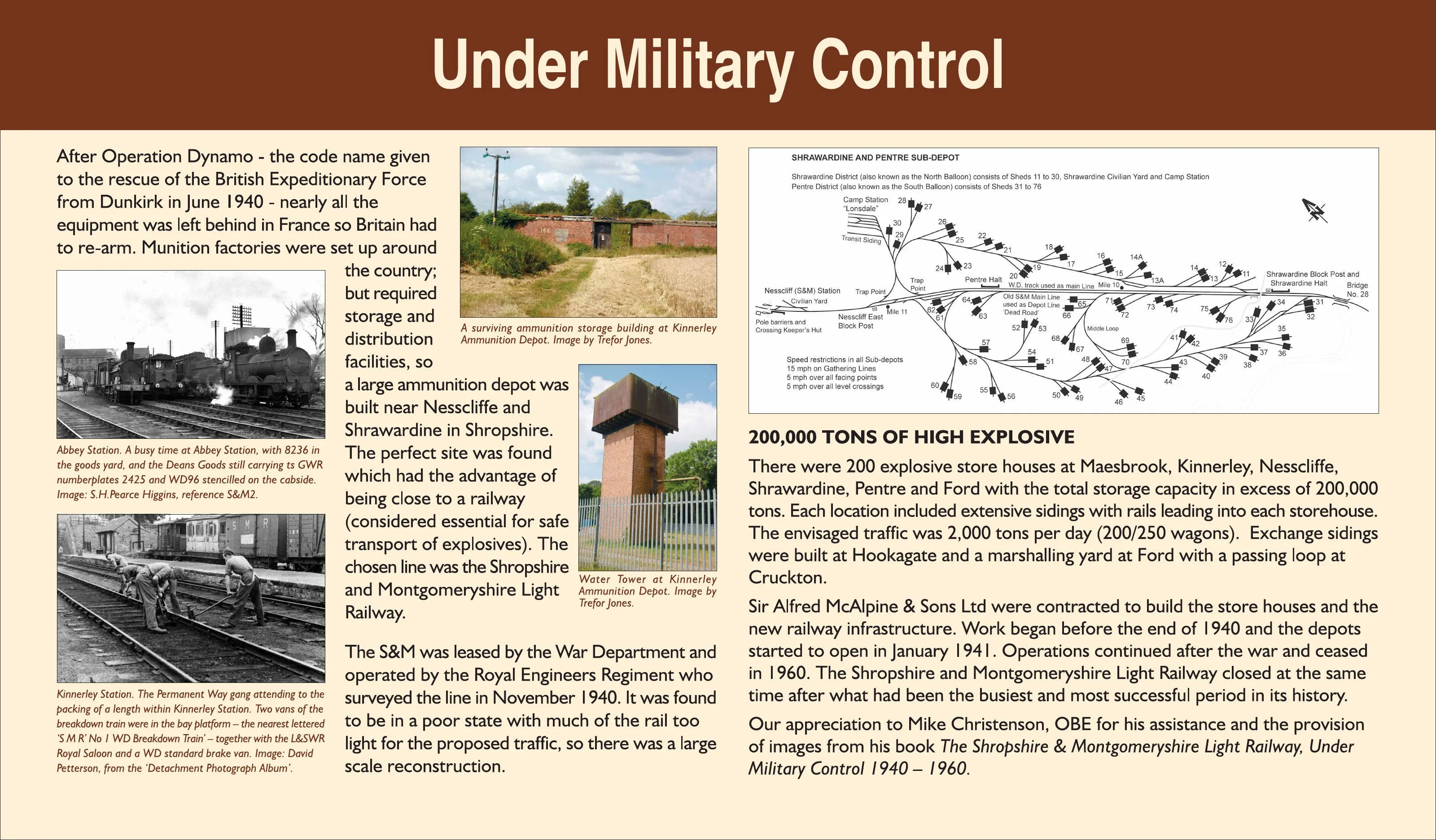
Panel 4
Under Military Control
Shrewsbury Railway Heritage Trust remembers Captain William Proctor, who died on 20th November 1947 aged 31 at the Royal Shrewsbury Infirmary. He had been responsible for controlling 200,000 tons of high explosive at the once-secret military explosive transport hub with bases at Kinnerley and Nesscliffe in Shropshire.
Read the panel text
Under Military Control
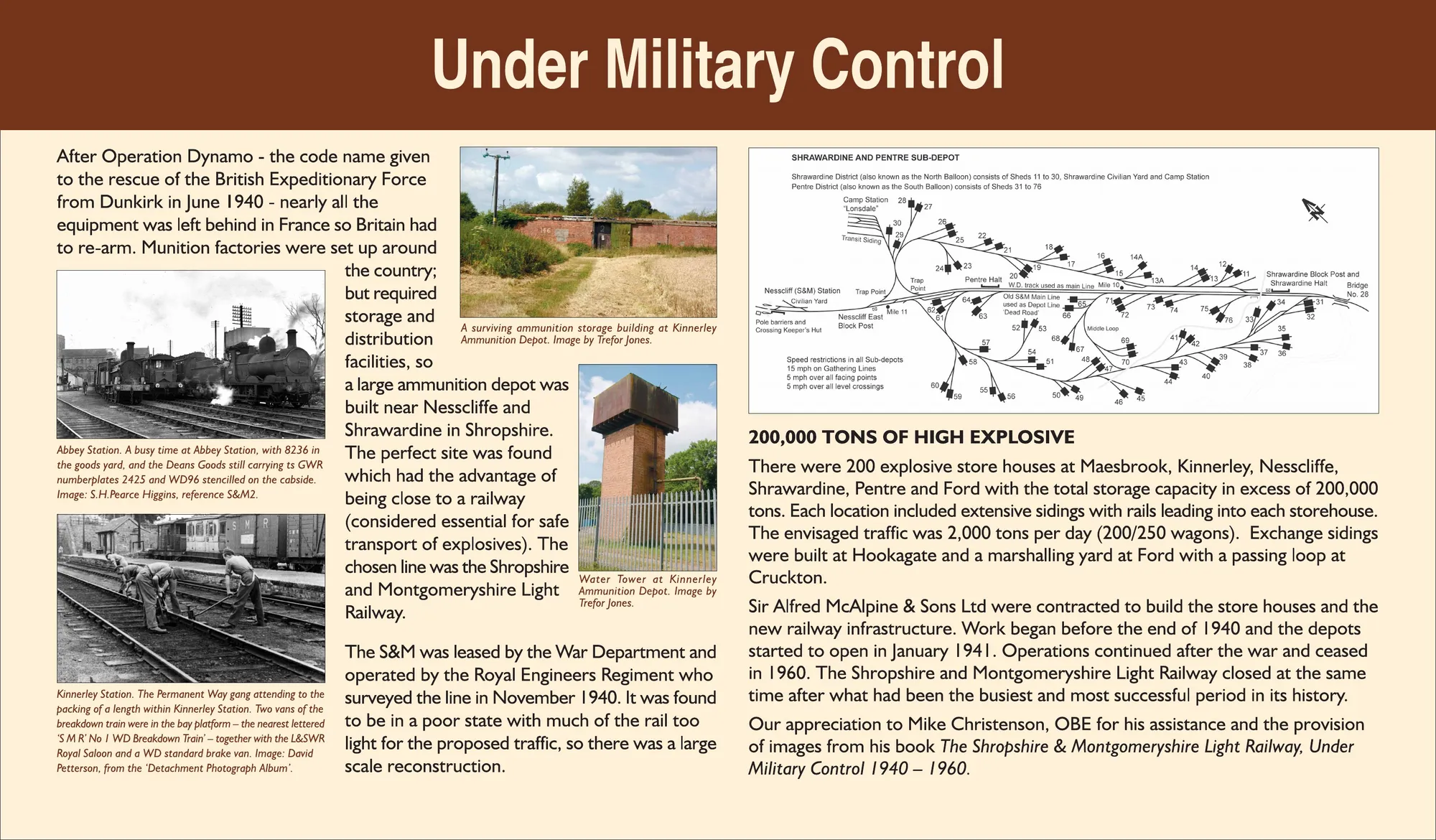
After Operation Dynamo – the code name given to the rescue of the British Expeditionary Force from Dunkirk in June 1940 – nearly all the equipment was left behind in France, so Britain had to re-arm. Munition factories were set up around the country, but required storage and distribution facilities, so a large ammunition depot was built near Nesscliffe and Shrawardine in Shropshire. The perfect site was found, which had the advantage of being close to a railway (considered essential for safe transport of explosives). The chosen line was the Shropshire and Montgomeryshire Light Railway.
The S&M was leased by the War Department and operated by the Royal Engineers Regiment, who surveyed the line in November 1940. It was found to be in a poor state, with much of the rail too light for the proposed traffic, so there was a large-scale reconstruction.
200,000 tons of high explosive
There were 200 explosive storehouses at Maesbrook, Kinnerley, Nesscliffe, Shrawardine, Pentre and Ford, with a total storage capacity in excess of 200,000 tons. Each location included extensive sidings with rails leading into each storehouse. The envisaged traffic was 2,000 tons per day (200/250 wagons). Exchange sidings were built at Hookagate and a marshalling yard at Ford, with a passing loop at Cruckton.
Sir Alfred McAlpine & Sons Ltd were contracted to build the storehouses and the new railway infrastructure. Work began before the end of 1940 and the depots started to open in January 1941. Operations continued after the war and ceased in 1960. The Shropshire and Montgomeryshire Light Railway closed at the same time, after what had been the busiest and most successful period in its history.
Our appreciation to Mike Christenson OBE for his assistance and the provision of images from his book The Shropshire & Montgomeryshire Light Railway, Under Military Control 1940 – 1960.
Pictures on the panel
- Abbey Station. A busy time at Abbey Station, with 8236 in the goods yard, and the Deans Goods still carrying its GWR numberplates 2425 and WD96 stencilled on the cabside. Image: S.H. Pearce Higgins, reference S&M2.
- Kinnerley Station. The Permanent Way gang attending to the packing of a length within Kinnerley Station. Two vans of the breakdown train were in the bay platform – the nearest lettered ‘S M R No 1 WD Breakdown Train’ – together with the L&SWR Royal Saloon and a WD standard brake van. Image: David Petterson, from the ‘Detachment Photograph Album’.
- A surviving ammunition storage building at Kinnerley Ammunition Depot. Image by Trefor Jones.
- Water tower at Kinnerley Ammunition Depot. Image by Trefor Jones.
- Track plan of the Shrawardine and Pentre sub-depot.
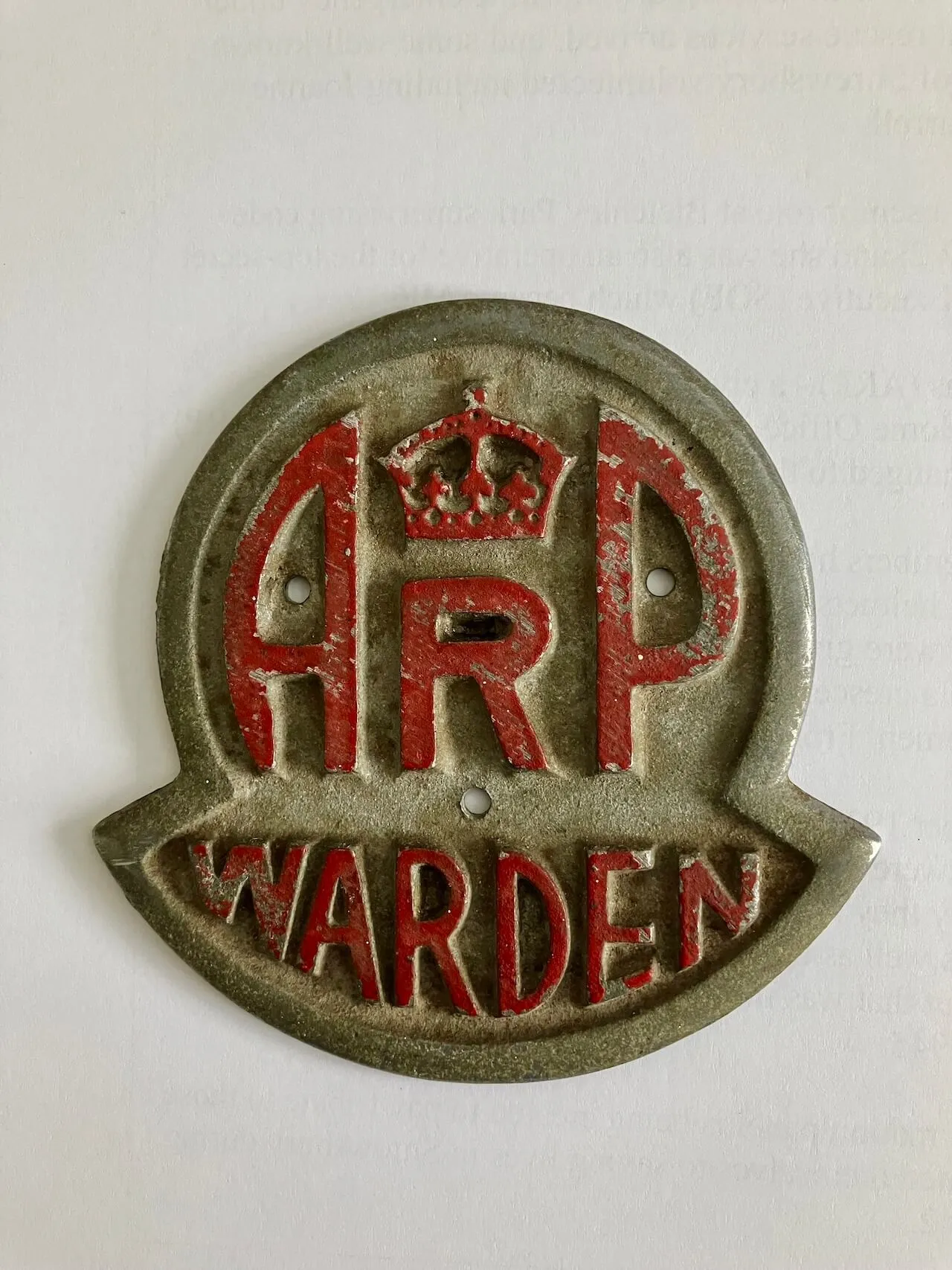
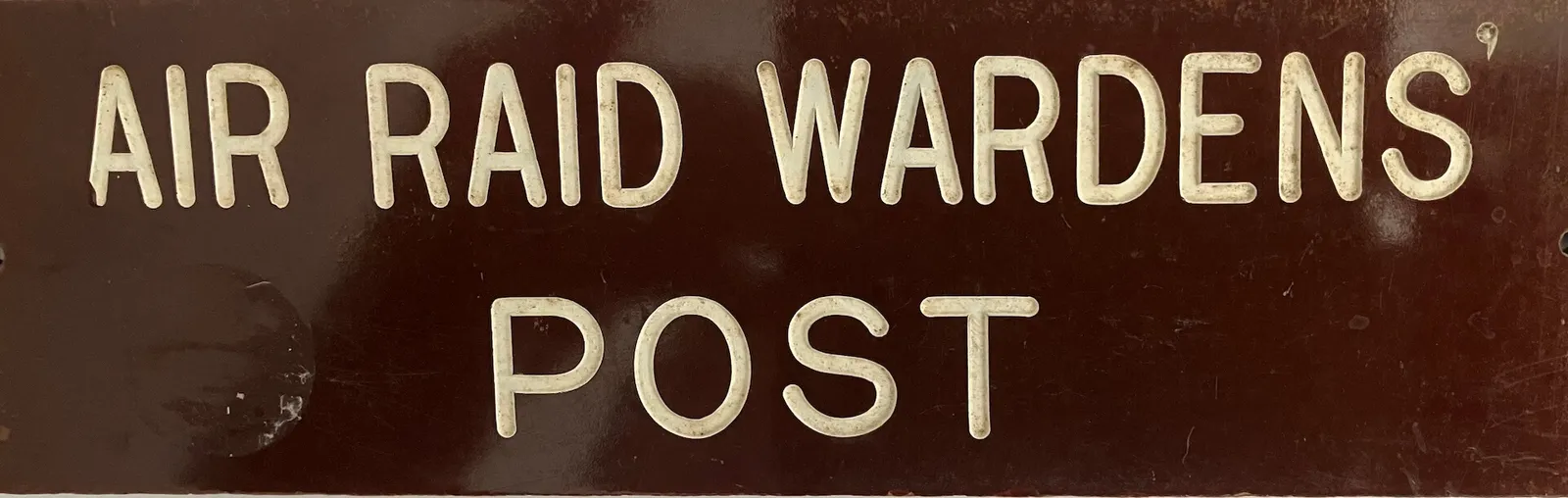
Abbey Station – World War 2 Air Raid Precautions Centre
Air Raid Precautions (ARP), a civil volunteer organisation, was established by the Home Office in 1935, and its name was changed to the Civil Defence Service in 1941. ARP wardens had to enforce the blackout that was introduced on 1st September 1939 and lasted until April 1945.
Abbey Station was the Air Raid Precautions Centre for Shrewsbury in World War 2. Mr Thomas, a local headmaster, was the Head Warden, and with a team of volunteers was tasked with keeping any wartime emergency under control until official rescue services arrived. Some prominent citizens of Shrewsbury volunteered, including Joanne Peele and Hilda Murrell. Hilda Murrell had a senior role at Bletchley Park supervising code breaking during WW2, and she was also an operative for the top-secret Special Operations Executive (SOE), which became MI6.
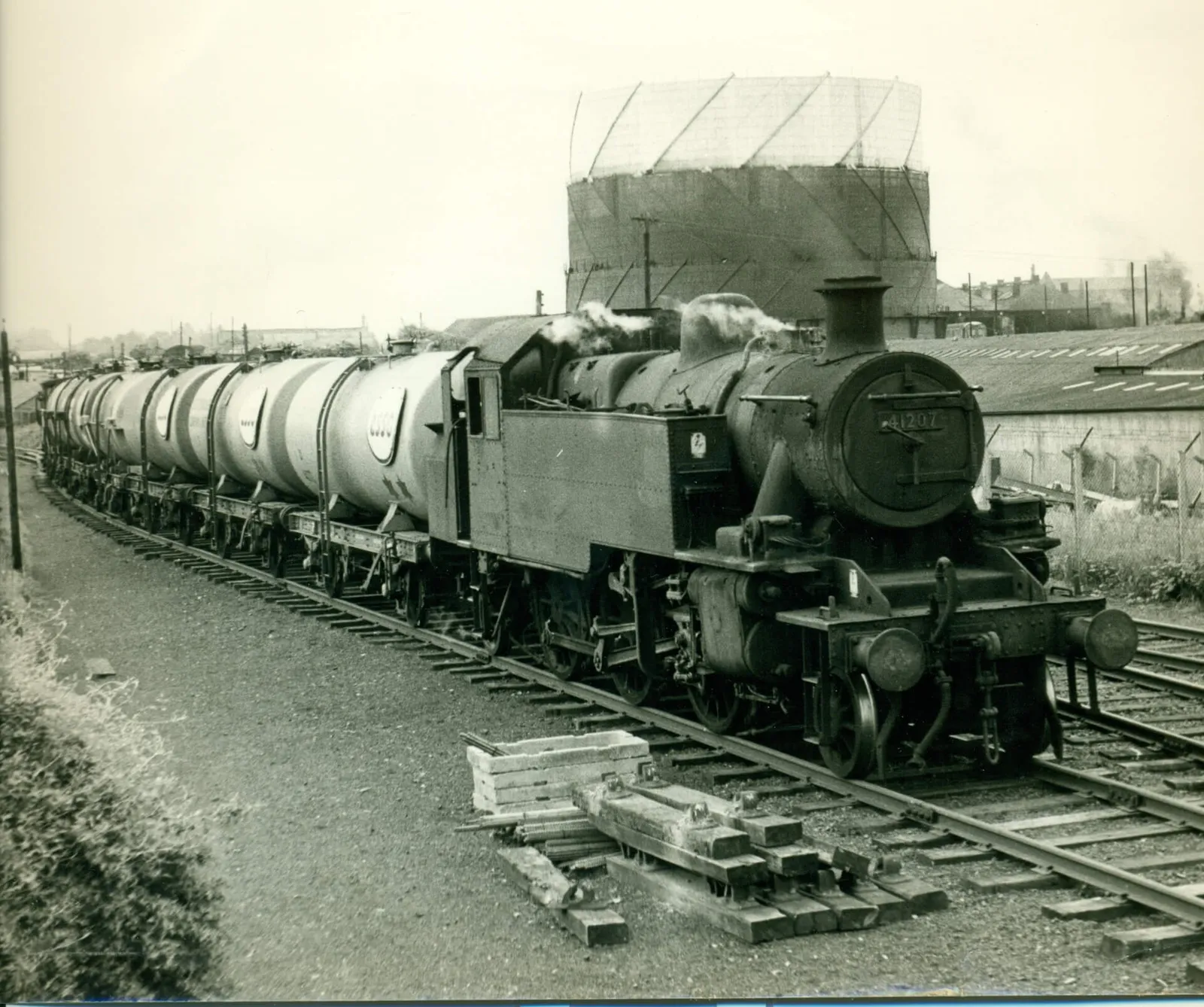
Oil Tankers at the Abbey Yard, Abbey Foregate
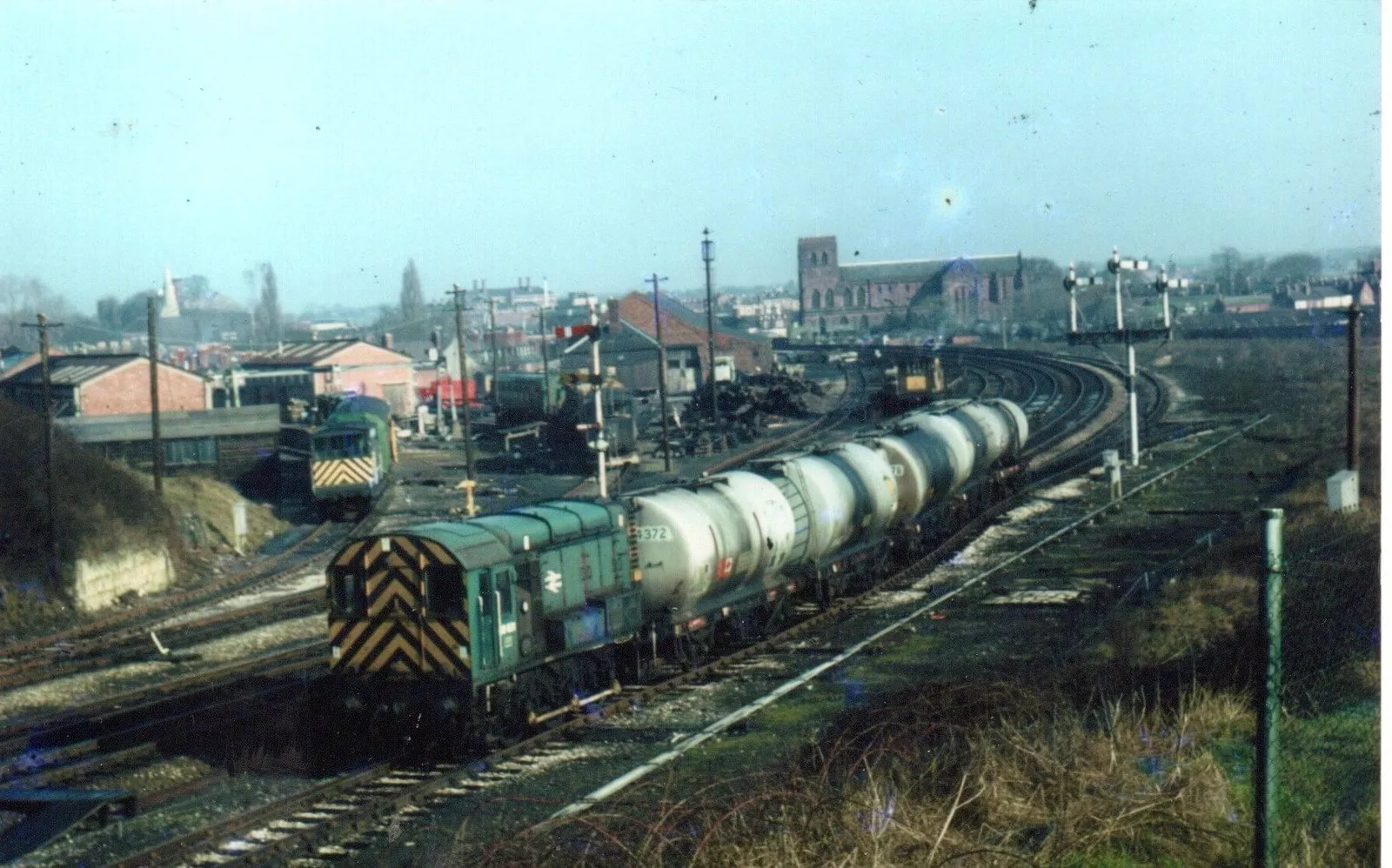
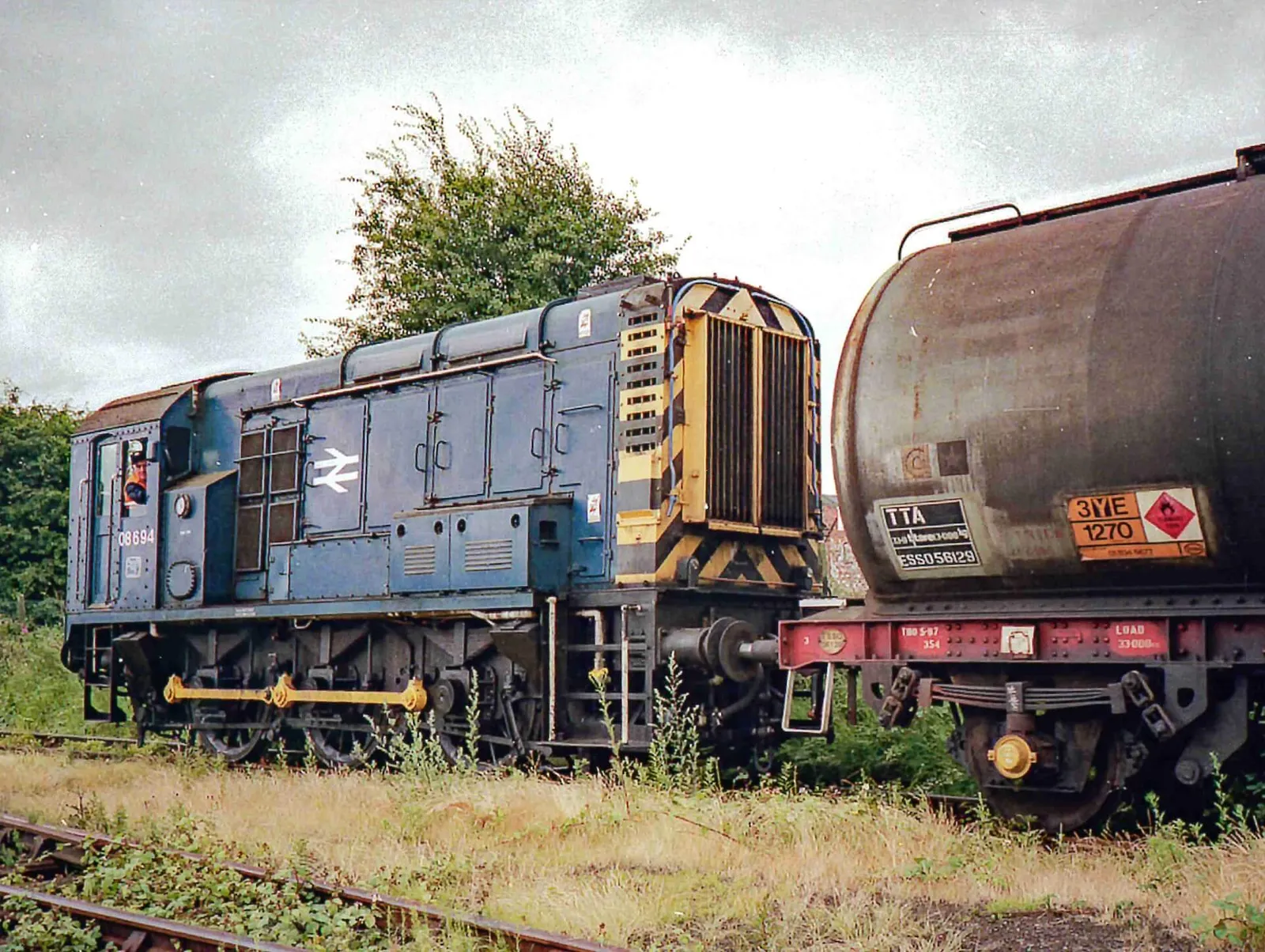
The Oil Depot was established in 1934 for the Anglo-American Oil Company, which began using the Esso name around that time, and the ‘Abbey Yard’ was used as an oil despatch yard from 1960 after the War Department closed it. Railway operations by the War Department had ceased, and the Old Abbey Station yard (the former goods yard of the Abbey railway station) was developed as the Bates & Hunt oil depot. From here railway tank wagons were unloaded into road tankers.
About 3 times a week a little LMS Ivatt 2-6-2 Tank loco or a GW Pannier tank with around 4 tankers would negotiate the poor track-bed to get down to the depot. They would come there via the Severn Valley line, and then reverse up a new spur, where Adams Ridge, Shrewsbury is now. It was shut down on July 5th 1988.
When steam had finished in this area, the standard 0-6-0 BR Diesel Shunters took over the duty. They later became known as Class 08 Shunters. The depot survived until 1988, when the track was in too bad a state to continue, and the tracks were taken up in 1990.
Visit Abbey Station
See the panels in person and explore the railway artefacts on display at the Abbey Station Visitor Centre.